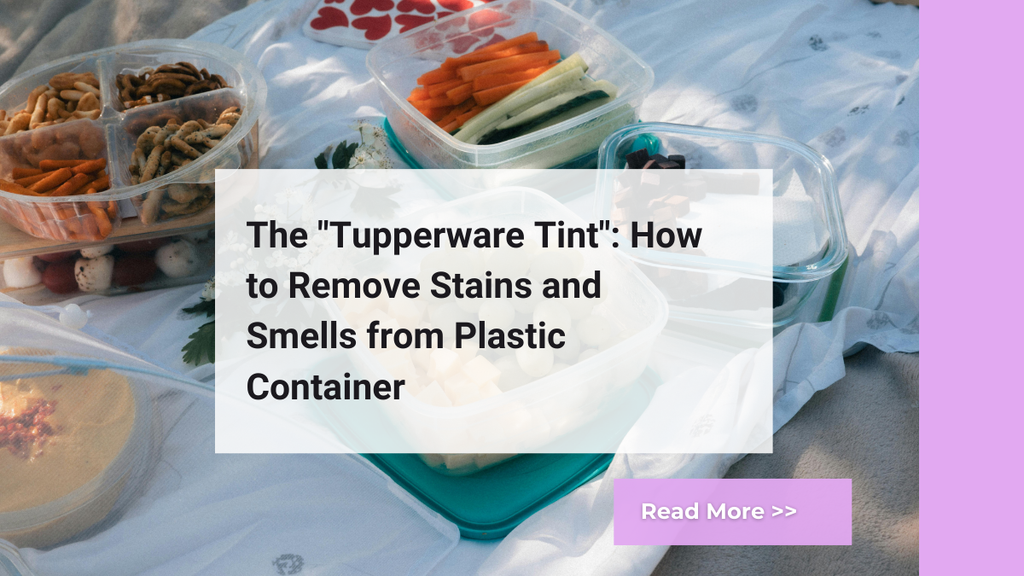
The "Tupperware Tint": How to Remove Stains and Smells from Plastic Container
By PUREZEST | Canadian-Owned | 5 Min Read
We have all been there. You cook a delicious batch of spaghetti bolognese. You pack the leftovers for lunch. But when you wash that container later, the nightmare begins.
The orange tint won't leave. The smell of garlic and onion lingers. You scrub. You soak. You use hot water. Nothing works. You are left with a stained, smelly container that you don't want to use again.
Everyone hates orange spaghetti stains and lingering smells in their meal prep containers. It feels dirty, even when it is clean.
But it isn't your fault. And your plastic isn't broken. It’s just simple science. Standard soap cannot fight the specific chemistry of tomato sauce and plastic.
Here is the good news. You don't need to throw your containers away. You can save them. You just need to understand what is happening below the surface and use the right tool for the job.
Here is how to get your meal prep containers looking (and smelling) brand new again.
1. The Problem: Why Plastic Holds Onto Stains
Have you ever wondered why your glass bowls wash clean instantly, but your plastic ones hold onto grease?
It comes down to texture. To your naked eye, plastic looks smooth. But under a microscope, plastic is actually porous. It looks more like a sponge than a sheet of glass. It has tiny little holes and gaps all over the surface.
When you store hot food in plastic, two things happen:
-
Heat expands the pores: The heat from the food opens up those tiny gaps in the plastic.
-
Fats move in: Tomato sauce is acidic and oily. The red pigment (lycopene) binds to the fats in the sauce. These fats slide deep into the open pores of the plastic.
When the container cools down, the pores close up. They trap the fat, the red colour, and the smell inside the plastic itself.
Regular dish soap cleans the surface. But it cannot reach deep into those pores to grab the trapped grease. That is why you can scrub all day and still see orange. The stain isn't on the container. It is in the container.
To fix this, you need a solution that can go deeper. You need a Natural home detox for your kitchenware.
2. The Solution: How Enzymes Digest the Mess
If scrubbing doesn't work, what does? You need a cleaner that works on a microscopic level. This is where an Enzyme-based cleaner Canada moms love comes into play.
Chemical cleaners try to burn away stains with harsh bleach. This can damage your plastic and leave toxic residue behind. We know our health-conscious Canadian customers don't want that near their food.
Instead, we use enzymes.
Think of enzymes as nature’s tiny scissors. In our formula, we use two specific types of enzymes:
-
Lipase: This enzyme specifically targets fats and oils.
-
Protease: This enzyme breaks down proteins (like bits of meat or cheese).
When you apply an enzyme cleaner to your stained container, these tiny "scissors" enter the pores of the plastic. They hunt down the trapped fat molecules. Once they find them, they chop them up into smaller, biodegradable pieces (like water and carbon dioxide).
Once the fat is chopped up, it loses its grip on the plastic. It releases the red dye and the bad smell. The stain literally gets "digested" by the cleaner.
This is the power of Non-toxic household cleaning. It is smarter, not harder.

3. The "Overnight Soak" Hack
Ready to restore your clear plastic? You don't need elbow grease. You just need time and the right formula.
Here is the step-by-step method to banish the "Tupperware Tint" using Purezest.
What You Need:
-
Your stained plastic container.
-
Warm water (not boiling).
-
Purezest Enzyme Dish Soap.
The Steps:
-
Rinse: Rinse out any loose food debris with warm water.
-
The Mix: Fill the container with warm water. Add one sturdy pump of our Enzyme Dish Soap.
-
Agitate: Put the lid on and give it a good shake to mix the enzymes.
-
The Wait: This is the most important step. Let it sit overnight. Enzymes need time to work. They are eating the stain, and digestion takes time. Leave it on the counter for at least 8 hours.
-
Wash: In the morning, dump the water. Wash normally with a sponge.
The Result: You will see the difference immediately. The cloudiness is gone. The orange tint is gone. Most importantly, the stale food smell effectively vanishes.
This method is safe for your family. It is arguably the best Pet-safe cleaning solution for pet food bowls, too. Plastic pet bowls get the same build-up of fats and saliva slime. A quick enzyme soak keeps them fresh and safe for your furry friends.
[INSERT LINK TO PUREZEST PRODUCT]
Did You Know?
Enzymes are not living things; they are biological catalysts. They accelerate chemical reactions—like breaking down grease—millions of times faster than water alone, without using heat or harsh chemicals.
Frequently Asked Questions (FAQ)
Is enzyme cleaning safe for cats? Yes, because our enzyme formula is non-toxic and biodegradable. Unlike bleach or ammonia, it leaves no dangerous chemical residue behind, making it safe for pet bowls and floors where paws walk.
Why does my plastic smell even after washing? Plastic is porous and traps microscopic food particles and bacteria deep inside the material. Regular soap only cleans the surface, while enzyme cleaners penetrate the pores to break down the source of the odor.
Are enzyme cleaners better than vinegar? Yes, for certain jobs. Vinegar is an acid that works well on mineral deposits (like lime scale), but it struggles with grease and fats. Enzymes like Lipase are specifically designed to break down fats and organic stains that vinegar cannot remove.
You don't have to throw away your good meal prep containers just because they look a little loved. The "Tupperware Tint" is stubborn, but it is not permanent.
By swapping harsh chemicals for smart enzymes, you are doing more than just cleaning dishes. You are choosing a safer path. You are choosing a Canadian Brand that prioritizes your health. You are choosing a solution that is tough on stains but gentle on the planet.
Stop scrubbing. Start soaking. Let the enzymes do the work for you.
Ready to refresh your kitchen? Shop our full line of herbal and enzyme-based cleaners today at purezest.ca.